
28.10.2026
CLIMIT supports safer and more cost-effective CO₂ pipelines
DNV has been awarded up to NOK 19.8 million in funding from CLIMIT Demo for an extensive testing programme under CO2SafePipe.
The project will develop and validate new methods to prevent fracture propagation in CO2 pipelines. The aim is to reduce technical uncertainty and enable safer, more cost-effective CO2 transport. CO2SafePipe builds on previous research supported by CLIMIT. The project aims to improve predictive models, reduce uncertainty and support the development of more cost-effective CO2 infrastructure.
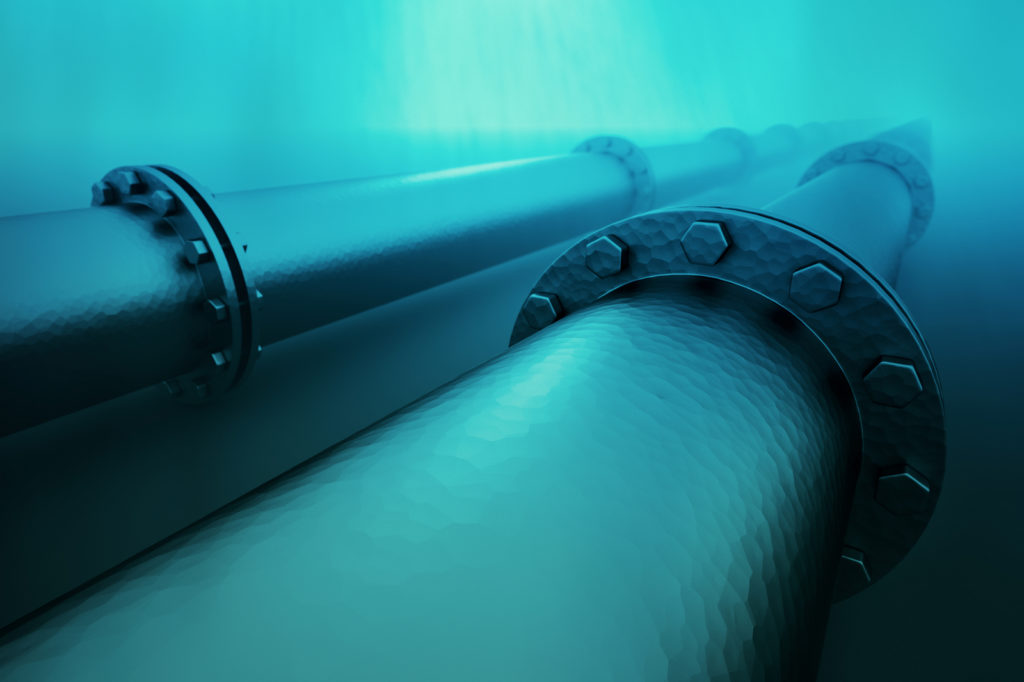
Subsea pipeline.
Developing and validating new methods
Transporting CO2 from capture facilities to permanent storage sites is a key part of the carbon capture and storage (CCS) value chain. As more CCS projects are developed, the need for safe and cost-effective transport infrastructure continues to grow.
Through the CO2SafePipe joint industry project, DNV is developing and validating methods to support more accurate CO2 pipeline design while avoiding unnecessarily high material costs.
Building on CLIMIT-funded research
The new project builds, among other things, on findings from CO2SafeArrest, which was carried out between 2016 and 2021 with support from CLIMIT. It had a total budget of NOK 40 million, of which 50 per cent was funded by CLIMIT.
The results contributed to the 2021 update of DNV’s recommended practice for the design and operation of CO2 pipelines, DNV-RP-F104.
New tests to reduce uncertainty
A key challenge in transporting CO2 under high pressure is the risk of a fracture propagating along a pipeline. To ensure that such fractures are arrested, pipelines must be designed with appropriate material properties and sufficient wall thickness.
In the second phase of CO2SafePipe, DNV will combine advanced simulations with six full-scale tests. The testing programme will be conducted at DNV’s Spadeadam research and testing facility in the United Kingdom.
The aim is to validate new predictive models for fracture propagation and develop more accurate methods for designing both new pipelines and existing infrastructure being considered for CO2 transport.
Supporting the scale-up of CCS
CO2SafePipe was established in 2023 and, according to DNV, has grown from 15 to 38 participants and stakeholders. The project brings together industry players with expertise in pipeline technology, materials and transport infrastructure.
The new phase aims to reduce technical uncertainty, avoid unnecessarily conservative pipeline design and provide a stronger basis for assessing the reuse of existing pipelines. This will also contribute to the knowledge base for further development of DNV-RP-F104, a recommended practice used internationally.
With support from CLIMIT-Demo, the project continues research that has already contributed to industry guidelines. The objective is to make future CO2 transport safer and more cost-effective.